
- Filipino domestic helpers typically have strong English communication skills — well-suited to English-speaking households and childcare.
- Minimum salary set by POLO — contact PMA for the current applicable rate.
- Security bond: government-held deposit — confirm current amount with PMA.
- Placement timeline: typically 2–4 months (longer than Indonesian due to POLO steps).
- Best suited for: English-speaking households, childcare-focused homes, international families, expats.
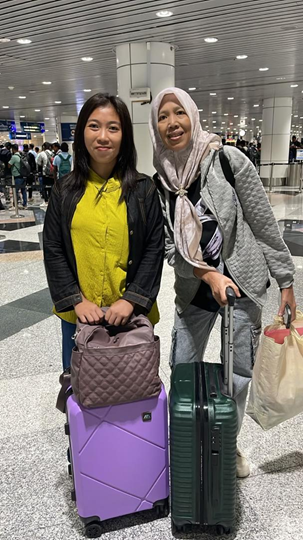
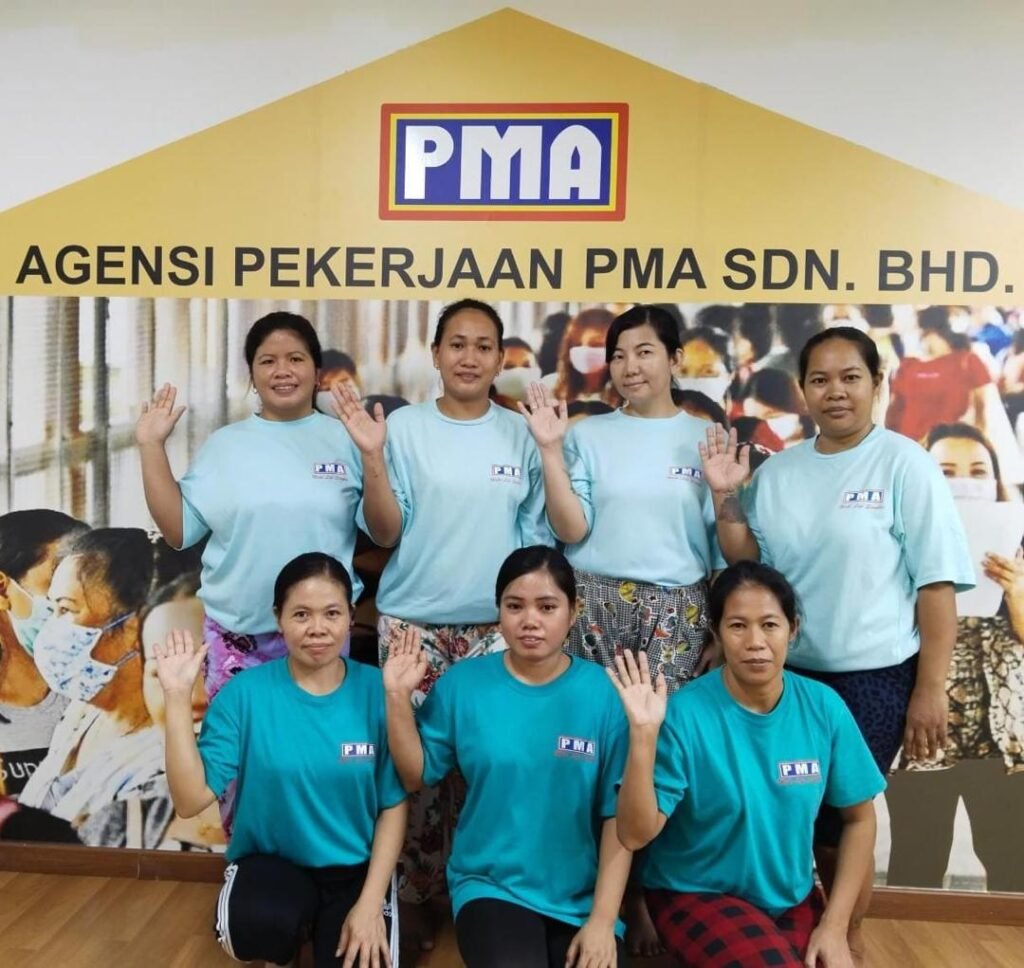
Why Families Choose Filipino Domestic Helpers
Filipino domestic helpers are the second most common nationality placed in Malaysian households, chosen specifically for their strong English communication skills and professional work ethic. For families where the working language is English — particularly those with children in international or national-type schools, or households with expat members — a Filipino helper's fluency removes the communication barrier that can slow a placement's success.
In our experience at PMA, Filipino helpers also tend to approach their role with a high degree of professionalism and adaptability. Many have worked previously in Singapore, Hong Kong, or other international markets before Malaysia, which means they arrive with experience in professional household standards and multi-cultural environments.
POLO — What It Is and Why It Matters
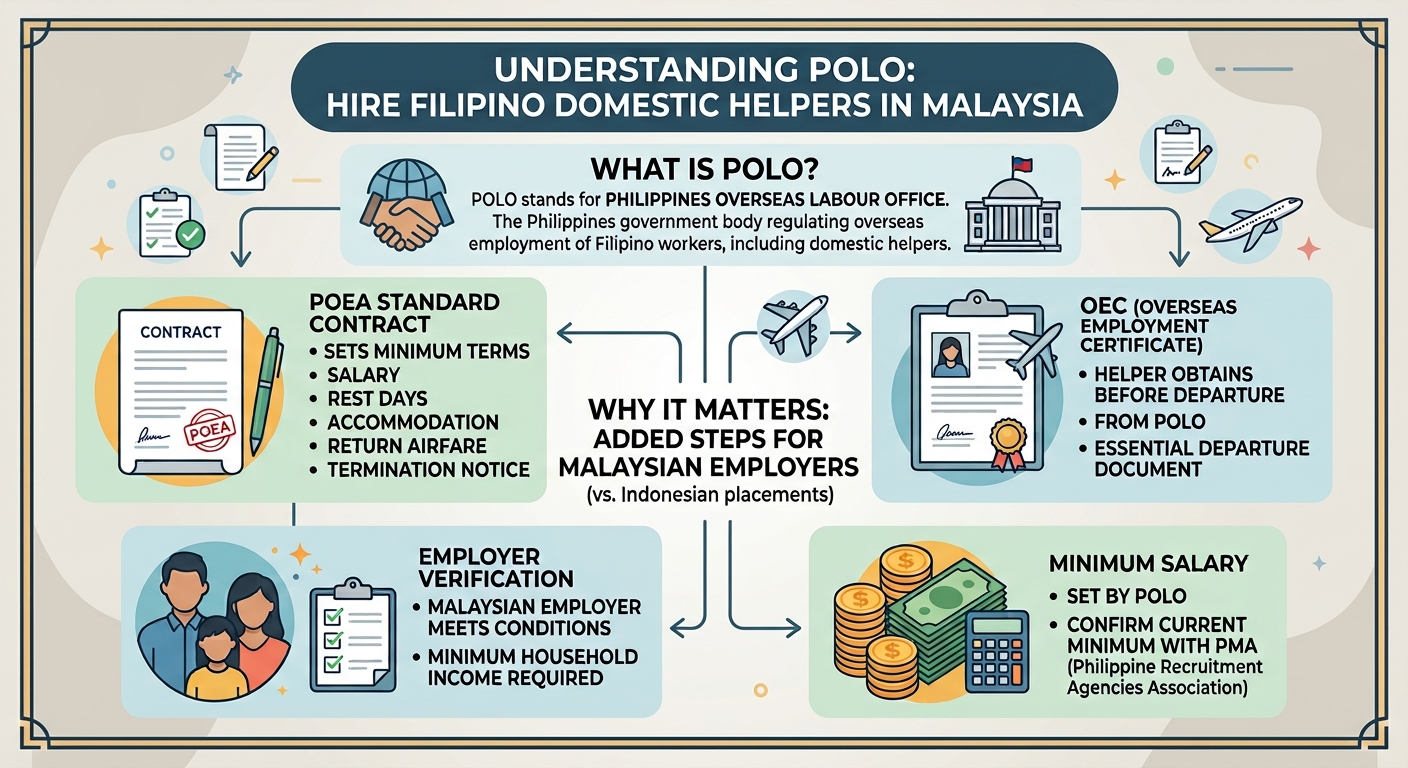
POLO stands for Philippines Overseas Labour Office, which is the Philippines government body that regulates the overseas employment of Filipino workers, including domestic helpers. For Malaysian employers, this means additional steps that do not apply to Indonesian placements:
- POEA Standard Employment Contract: Filipino helpers must be employed under the POEA (Philippines Overseas Employment Administration) standard contract, which sets minimum terms — salary, rest days, accommodation standards, return airfare, and termination notice.
- Overseas Employment Certificate (OEC): The helper must obtain an OEC from POLO before departure from the Philippines.
- Employer verification: POLO requires that the Malaysian employer meet minimum conditions — including a minimum household income.
- Minimum salary: Set by POLO — confirm the current applicable minimum with PMA before signing any employment contract.
POLO salary requirements: The POLO minimum salary for Filipino domestic helpers in Malaysia is subject to revision. Always confirm the current applicable minimum with PMA or POLO Kuala Lumpur before signing any employment contract.
Who Filipino Domestic Helpers Suit Best
- English-speaking households — Filipino helpers communicate fluently in English from day one
- Childcare-focused homes — particularly households with school-age children who need English-medium assistance and supervision
- International or expat families — where English is the household working language
- Professional households — families who want a helper comfortable operating independently in a structured, professional environment
- Infant care — many Filipino helpers have specific infant care training and experience
For multi-generational households where elderly family members speak Malay or do not use English regularly, or for families where cultural familiarity and local food knowledge is the primary priority, an Indonesian domestic helper is often a better fit.
Typical Skills and Profile
- Fluent English — most Filipino helpers can communicate, read, and write in English comfortably
- Training certificates from TESDA (Technical Education and Skills Development Authority, Philippines) or equivalent
- Childcare experience — many have formal infant and toddler care training
- Cooking — adaptable, can learn local Malaysian dishes with guidance
- Professional presentation and time management — often experienced from previous international placements
Indonesian vs Filipino — Side-by-Side Comparison
| Factor | Indonesian Helper | Filipino Helper |
|---|---|---|
| English proficiency | Variable — basic to conversational | Strong — most are fluent |
| Malay / Bahasa | High — near-native | Low — needs to learn |
| Local food familiarity | High — halal, local cuisine native | Moderate — adapts with guidance |
| Cultural fit | High proximity to Malaysian culture | Professional; may need adjustment to local norms |
| Best for | Elderly care, Malay households, multi-gen | Childcare, expat/English homes |
| Min. salary | MOU floor — contact PMA | POLO floor — contact PMA |
| Security bond | Government-set — confirm with PMA | Government-set — confirm with PMA |
| Timeline | 1–2 months (typical) | 2–4 months (typical) |
Costs — Filipino Domestic Helper
- Agency fee (PMA): Contact any branch for a current written quotation.
- Government levy: Annual fee paid to the government. Rate set by regulation — confirm current rate before payment.
- FOMEMA medical screening: Annual requirement. Confirm current fee at fomema.com.my.
- Security bond: Government-held deposit. Confirm current amount with PMA.
- Personal accident insurance: Mandatory. Amount depends on chosen insurer.
- Monthly salary: Minimum set by POLO and subject to revision. Confirm the current applicable rate with PMA before signing the employment contract.
Full fee categories overview →
Frequently Asked Questions — Filipino Helpers
-
The minimum monthly salary for Filipino domestic helpers is set by POLO and is subject to revision. Contact PMA or POLO Kuala Lumpur to confirm the current applicable rate before signing any employment contract.
-
Filipino placements involve additional processing steps through POLO: the helper must obtain an Overseas Employment Certificate (OEC), the employer must pass POLO's verification checks, and the POEA Standard Employment Contract must be processed. These steps, which do not exist for Indonesian placements, typically add 4–8 weeks to the timeline.
-
Filipino helpers can learn to prepare Malaysian dishes with guidance — they are generally adaptable cooks. However, they do not arrive with the native familiarity with local ingredients and techniques that Indonesian helpers typically have. If cooking is a high priority and you want a helper who can immediately prepare Malaysian cuisine, an Indonesian helper may be the better starting point. If the household is comfortable guiding the cooking process, many Filipino helpers adapt quickly.